
What is staking and why does the blockchain need it
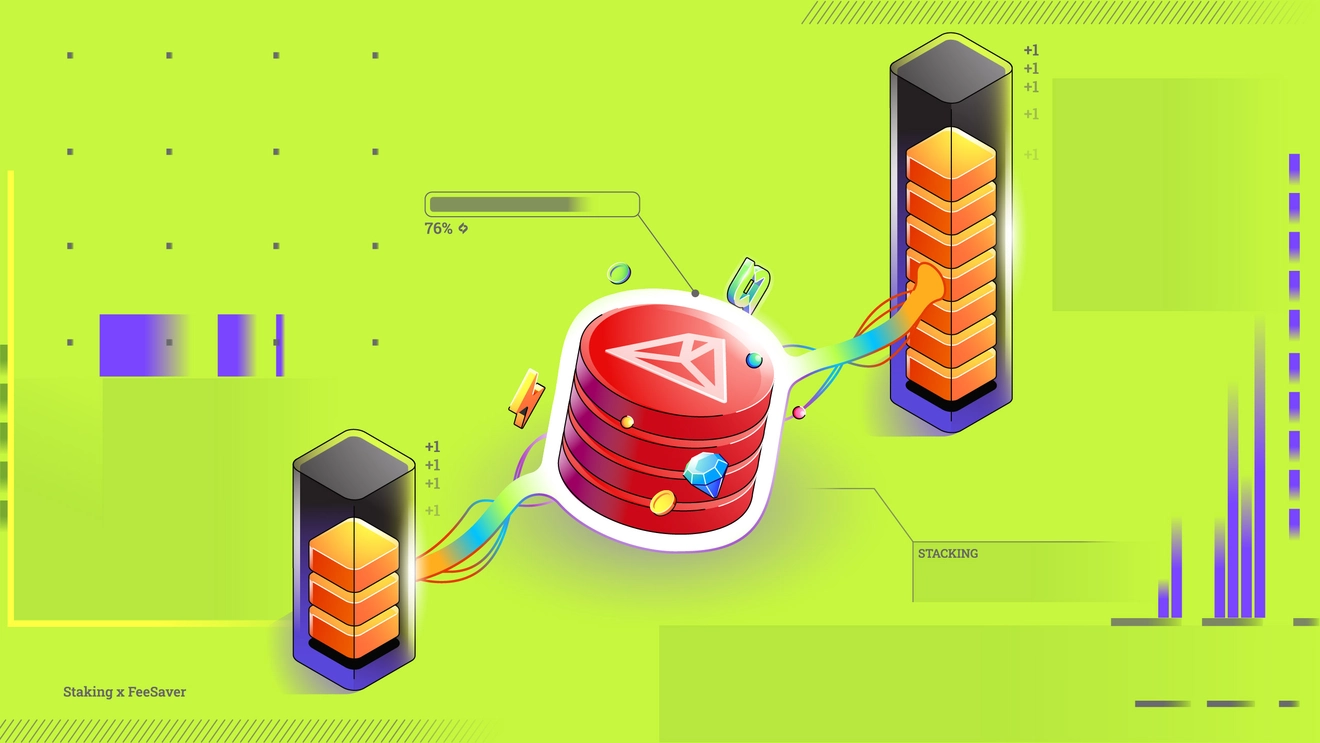
“Staking” came from the world of finance and gambling, but in the crypto industry it gained a new meaning. Today, staking, or crypto staking, is understood as locking cryptocurrency in a blockchain network to participate in its operation – validating transactions, producing blocks, and maintaining security.
The key requirement for blockchain staking is the consensus mechanism Proof-of-Stake (PoS). Unlike Proof-of-Work (PoW), where security is provided by computing power (mining), in PoS a participant’s “weight” is determined by the amount of locked assets.
The first PoS ideas appeared in 2011 (Bitcointalk forum), and a year later the first implementation – Peercoin – was released. PoS adoption accelerated in 2017–2020 with the growth of DeFi and Ethereum’s transition to PoS in 2022.
What the network gets from stakers: Ethereum and TRON
Staking is the process of locking cryptocurrency to support blockchain operations. It plays a key role in Proof-of-Stake (PoS) and Delegated Proof-of-Stake (DPoS) consensus mechanisms, providing network security, decentralization, and efficiency.
|
Network |
What the network gets from staking |
What participants (stakers) get |
|
Security: the more ETH is staked, the more expensive it is to attack the network. Decentralization: many validators distribute power. Energy efficiency: PoS consumes thousands of times less energy than PoW. Stability: reduced liquid ETH supply can affect price. |
Rewards in ETH, proportional to the amount of locked assets and network activity. The ability to use liquid staking (stETH, rETH) in DeFi protocols. Voting rights in some governance decisions. |
|
|
Security: Super Representatives (SR) validate blocks, and user voting helps prevent centralization. Scalability: Energy and Bandwidth reduce network load (transactions without burning TRX). Governance: decentralized decision-making through voting. |
Tron Power (TP) for voting for Super Representatives. Energy and Bandwidth – resources for executing transactions and smart contracts without fees. Rewards from Super Representatives in TRX for supporting their work. |
Staking is critically important for PoS-based networks and its variations because it:
- Provides security: locked assets act as collateral for honest validator behavior. In case of violations (for example, double signing), part of the stake may be confiscated (slashing).
- Supports consensus: validators selected based on stake ensure consistency of the blockchain state.
- Promotes decentralization: distributing stake across many participants prevents dominance by individual actors.
Without a sufficient amount of stake, the network becomes vulnerable to attacks, and its operation may be disrupted due to a shortage of validators or centralized governance.
Top 4 popular networks for staking
When choosing a cryptocurrency for staking, it is important to consider the reliability and popularity of the chosen network. Let’s look at four of the most in-demand platforms: Ethereum, TRON, Solana and BNB Chain.
Ethereum (ETH)
Mechanism. Consensus system – PoS. For independent validation, a minimum of 32 ETH is required.

Reward. Earning rewards for block validation, tips, and rewards from out-of-order mining operations (MEV).
Features. Liquid staking is available via services like Lido and Rocket Pool. User assets are converted into stETH or rETH, while keeping the ability to withdraw funds freely.
TRON (TRX)
Mechanism. DPoS is used. Validators are selected through user voting.

Reward. When staking TRX, a user receives:
- Energy and bandwidth – resources required to execute transactions and smart contracts.
- Tron Power (TP) – votes for voting for Super Representatives.
- By voting for SRs, users receive rewards from them. Super Representatives, in turn, validate blocks and distribute rewards among voters.
Users earn passive income in TRX, can use energy and bandwidth for free transactions, and can influence network governance through voting.
Solana (SOL)
Mechanism. A hybrid PoS protocol is combined with a transaction history verification system (Proof of History).

How does it work? An investor delegates coins to a validator, who validates transactions and earns rewards. Payout frequency depends on the conditions set by the network.
Advantages. High transaction processing speed (up to 65,000 operations per second) and minimal fees make it attractive for active traders and decentralized application developers.
BNB Chain (BNB)
Mechanism. Proof of Staked Authority (PoSA): a mix of DPoS and Authorized Proof of Authority (PoA) elements.

Staking. You can freeze BNB yourself or use specialized platforms from the Binance exchange.
Earnings. Income comes from transaction fees and periodic distributions of new tokens. In addition, thanks to integration with the Binance exchange, investors have access to a wide range of trading tools and the benefits of the Binance DEX ecosystem.
Each of these cryptocurrencies offers a unique staking environment with different terms and earning opportunities. The choice depends on the user’s preferences regarding risk, management convenience, and expected profit.
How to earn from staking: why TRON is the best choice
Staking is not just “holding coins”, but an active way to earn on your assets. Among all networks, TRON (TRX) staking stands out on three key parameters:
- Security. The DPoS mechanism has been tested for years, and SRs go through strict selection, with transparent operations. Slashing (penalties for violations) minimizes fraud risks.
- Profitability. TRX staking yields are higher than ETH, SOL, and BNB and can reach 18–20%. Additional income can come from selling Energy. SR rewards are paid regularly. With 1,635 TRX ($500), the daily staking income at a 15.63% rate would be $0.22 and $1.51 per week. The same amount staked generates about 15,500 energy, which can be sold at $0.5–0.75. This is an estimated income, as the rate can change, plus additional earnings may come from reinvesting payouts.
- Stability. TRON has low fees and high throughput. Energy/Bandwidth are generated automatically – you can use them for your own needs or sell them. The network is resilient to congestion.
Feesaver Staking simplifies TRX staking: reward distribution, minimal fees, and an intuitive interface for beginners.
Is it worth staking cryptocurrency?
If you hold cryptocurrency, especially long term, staking is a practical tool to grow capital. Even a small 2–5% annual return is better than zero return from simply holding coins. But if your goal is maximum earnings, choose TRON (TRX) staking. It combines:
- High yield.
- A low entry threshold.
- Transparency and security.
Start with TRON TRX staking on FeeSaver and turn your TRX into a source of passive income.
-
What does staking mean in simple terms?
Staking is a way to earn income from cryptocurrency without selling it. A user locks coins in a blockchain, and the network uses them to validate transactions and protect data. In return, the participant receives rewards in the same cryptocurrency.
-
What does staking do in a blockchain?
Staking serves several functions: it secures the network, helps participants reach consensus, reduces the risk of attacks, and incentivizes users to support blockchain operations. Proof-of-Stake networks cannot operate reliably without staking.
-
How is blockchain staking different from mining?
The main difference is the operating mechanism. Mining (PoW) requires powerful hardware and high electricity costs. Blockchain staking (PoS) is based on locking cryptocurrency and does not require computing power, making it more accessible and more energy efficient.
-
Is crypto staking safe?
In most large networks, crypto staking is considered safe if you follow basic rules: choose reliable blockchains, trusted validators, and official services. The main risk is slashing – penalties caused by validator violations.
-
How much can you earn from crypto staking?
Yield depends on the network, token, and staking terms. On average, it is 3–8% per year, but in some networks such as TRON, returns can be higher and reach 15–20% per year. Final profit also depends on token inflation and network activity.
-
Can you withdraw coins from staking at any time?
It depends on the blockchain. Some networks have an unbonding period that can last from several days to several weeks. In Ethereum and some other networks, liquid staking solutions allow you to keep access to funds.
-
Is staking suitable for beginners?
Yes, staking is suitable even for beginners. Many networks and services offer a simple interface, a low entry threshold, and automated reward distribution. This makes crypto staking one of the simplest ways to earn passive income in cryptocurrencies.
-
Why is TRON staking considered profitable?
TRON staking has low fees, high network throughput, and stable payouts. Users receive not only rewards in TRX, but also Energy and Bandwidth resources that can be used for transactions or additional earnings.
Другие статьи
Перейти в блог

Every transaction
without FeeSaver — is an overpayment
Connect your addressright now and start saving!
Комментарии (0)