
Cryptocurrency staking: what it is and how to earn passive income
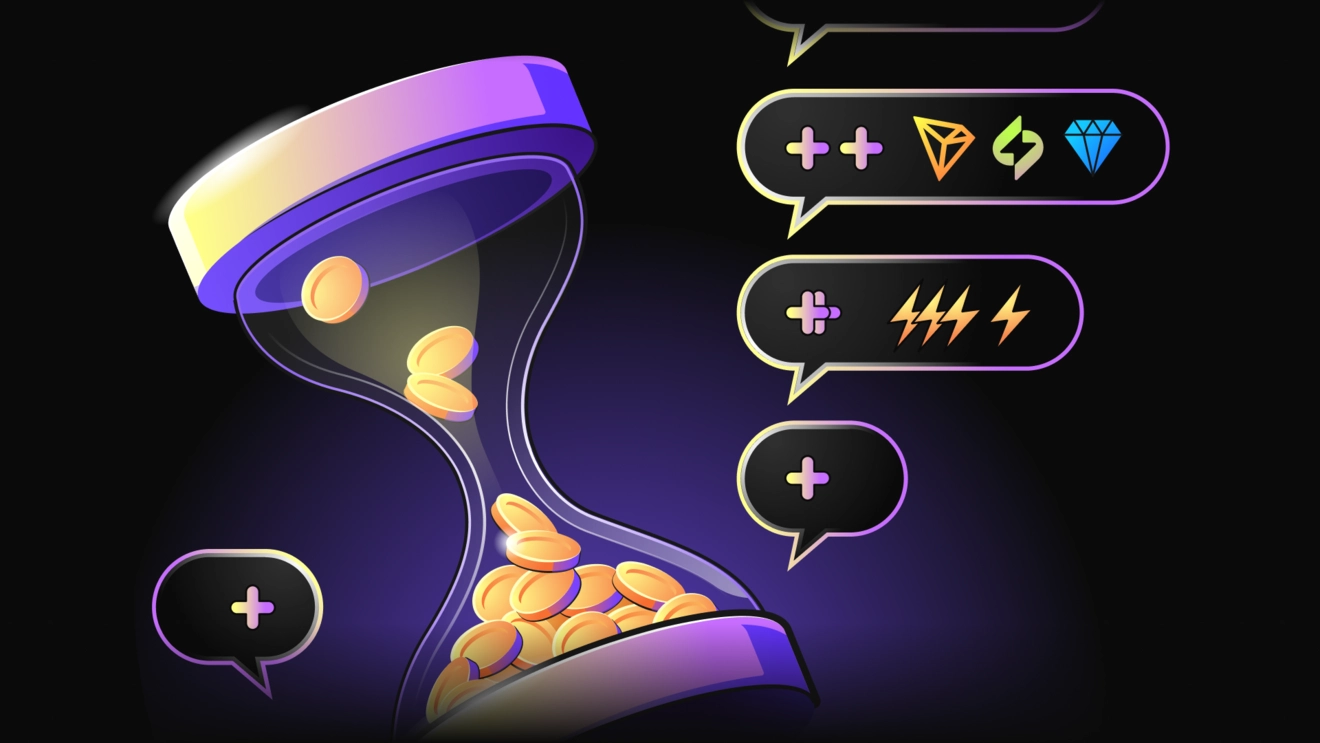
Staking is a way to earn passive income in the crypto industry. Users lock (freeze) their digital assets in a blockchain network to support its operation – validating transactions and helping maintain security. In return, they receive rewards, typically paid in newly issued tokens.
Can you make money with staking? Yes, but with some important caveats:
- Returns depend on the chosen cryptocurrency, the lock-up period, and the blockchain or platform rules.
- There are risks – price volatility, technical failures, and fraud.
- Profits are not guaranteed – they correlate with network activity and demand for the asset.
Staking is especially attractive for long-term investors who want recurring yield without active trading. One of the most promising options is TRX (TRON) staking, known for strong TRX yields and practical real-world use cases.
How the yield is generated
Staking income comes from several mechanisms. The key point is that rewards are not “created out of thin air” – they have a clear economic basis within a blockchain network.
Staker rewards typically come from three main sources:
- New token issuance. The network mints new coins (a protocol-defined reward that contributes to the annual percentage) and distributes them among staking participants.
- Transaction fees. Network fees accumulate and may be partially distributed to stakers. The busier the network, the higher the total fees and the higher the potential yield.
- Payments for internal resources. In some blockchains (for example, TRON), income can be linked to the resource model. Energy can be delegated or sold so other users can execute transactions instead of paying fees. Votes can be delegated to validators for rewards.
What affects the yield
Key factors that influence staking returns:
- Issuance rate – higher issuance can increase rewards (but also increases inflation).
- Your share of total staking – if you stake 1% of all tokens, you receive about 1% of distributed rewards.
- Network activity – transaction volume directly affects fee-based rewards.
- Token price – real profit depends on the asset price when you withdraw or realize gains.
- Validator fees – delegated staking may include additional fees paid to validators.
Important: part of your yield may go to a validator or platform as a fee.
Types of staking
|
Type |
Key features |
|
Fixed |
|
|
Flexible |
|
|
Delegated |
|
Staking process using TRX as an example
TRON (TRX) is a DPoS blockchain where staking is built in as a core part of the ecosystem.
A typical staking flow looks like this:
- Buy TRX. Purchase tokens on an exchange (Binance, Bybit, etc.) or via an exchanger (use reputable services).
- Move TRX to a wallet that supports staking. The most common choice is the official TronLink wallet.
- Lock tokens. In the wallet interface, choose “Staking” and specify the TRX amount.
- Choose staking parameters. For TRX you can select which resource you want to receive: Energy or Bandwidth (many users choose Energy).
- Receive Energy and votes. Locked TRX generate Energy and votes, and votes can be delegated to validators.
- Earn rewards. Payouts are typically daily or weekly depending on validator terms. The generated Energy can be sold, which may create an additional income stream.

A relatively high yield of 19–20% is one of the reasons users consider this network. Other advantages include low transaction fees and the broad adoption of the TRON blockchain.
You can also stake TRX via our service FeeSaver Staking. You freeze TRX in your own wallet and delegate the resulting Energy resources to FeeSaver. In return, you receive daily payouts and up to 16% APY thanks to the use of your resources on TRON. Your TRX are not transferred to third parties – they remain on your address, and all interactions happen on-chain via official TRON infrastructure.
Which cryptocurrencies can be staked
|
Cryptocurrency |
Average yield |
Notes |
|
TRON (TRX) |
16–20% |
Energy selling, low fees, active community |
|
Ethereum (ETH) |
3–6% |
High reliability, but withdrawals can depend on protocol mechanics |
|
Cardano (ADA) |
4–7% |
Energy-efficient, potential unbonding period |
|
Solana (SOL) |
6–10% |
Fast network, but higher technical requirements for validators |
|
Polkadot (DOT) |
10–14% |
Cross-chain focus, more complex setup |
|
Avalanche (AVAX) |
7–12% |
High throughput, DeFi ecosystem |
Yields can change depending on market conditions.
How to choose a cryptocurrency for staking
When choosing an asset, consider:
- Yield. Compare rates across platforms. Higher yield does not always mean a better choice – assess the risks.
- Liquidity. Can you sell the asset or withdraw rewards quickly?
- Security. Check the reputation of the blockchain and the staking platform.
- Practical utility. Assets with real use cases (for example, TRON staking combined with Energy selling) can be more resilient.
- Unlocking conditions. Find out how long withdrawals and unbonding take.
- Fees. Account for validator and platform fees.
TRX staking is one of the few higher-yield options tied to practical usage in the ecosystem. It combines competitive TRX returns, the ability to sell TRON Energy as an additional revenue stream, and a relatively low barrier to entry.
To invest with lower risk:
- Diversify your portfolio – avoid putting everything into one asset.
- Start with flexible staking.
- Follow project and market news.
Staking is not “quick money” – it is a long-term approach to passive income. A careful strategy and proper analysis can help you benefit from the opportunities modern blockchains provide.
-
What is cryptocurrency staking?
Staking is a way to earn passive income where a user locks (freezes) digital assets in a blockchain network to support its operation (transaction validation and security). In return, rewards are credited, usually in the form of newly issued tokens.
-
What affects staking yields?
Final yields depend on the issuance rate, your share of total staking, network activity (transaction count), the token price at withdrawal, and validator or platform fees.
-
Which cryptocurrencies can be staked?
Staking is available in networks where rewards are paid for participating in consensus mechanisms. Typically, a user locks tokens in the network or delegates them to a validator (a validating node), and rewards are formed from protocol payouts and fees. Examples include TRON (TRX), Ethereum (ETH), Cardano (ADA), Solana (SOL), Polkadot (DOT), and Avalanche (AVAX).
-
How does staking work for TRX (TRON)?
Buy TRX → move it to a staking-capable wallet → select “Staking” and the amount → choose a resource (Energy or Bandwidth, often Energy) → after locking you receive Energy and votes (votes can be delegated to validators) → rewards accrue daily or weekly; Energy can be sold as an additional income source.
-
What is the yield on TRX staking?
TRX is often considered a higher-yield option, and current returns can reach 19–20%. Yields are not fixed and depend on conditions and market dynamics.
Комментарии (1)
-
Guest_001
Другие статьи
Перейти в блог-
 Education
Как отправить USDT TRC-20 с Ledger и снизить комиссию с помощью энергии TRON
-
 Education
Кому нужна аренда энергии TRON: биржам, кошелькам, платежным сервисам и не только
-
 Education
Как получить энергию в TronLink и использовать ее для перевода USDT
-
 Education
Как снизить комиссию при переводе USDT TRC-20 в Trust Wallet: встроенная и внешняя аренда энергии
Every transaction
without FeeSaver — is an overpayment
Connect your addressright now and start saving!
Трудно написать, какая доходность? 19 - 20% в год, в месяц в день в секунду?