
Native vs liquid TRON staking: a complete guide to earning with TRX
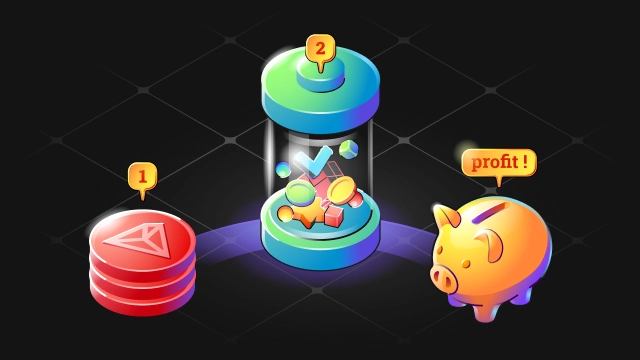
In the TRON (TRX) ecosystem, there are two key ways to earn passive income from your assets – native staking and liquid staking. Let’s break them down in detail: how they work, how they differ, and what opportunities and risks they involve.
What is staking on the TRON network?
Before moving to the differences between staking types, it helps to understand the basics of how TRON works. The platform operates using the Delegated Proof-of-Stake (DPoS) consensus mechanism, where TRX holders can:
- Vote for Super Representatives (SR), who confirm blocks and keep the network stable.
- Lock their tokens to receive rewards for supporting the network.
- Generate Energy and Bandwidth resources needed to run operations and execute smart contracts.
The token-locking process is what we call staking. Now let’s look at the two main staking approaches in the TRON ecosystem.
Native TRX staking
Native staking is direct staking on the Tron network without intermediaries. A user freezes TRX in a crypto wallet and participates in the DPoS consensus mechanism. Locked tokens allow the user to vote for Super Representatives, who validate blocks and distribute rewards to voters.
Key features of native TRX staking:
- Lock-up. TRX are not available for use during a defined period. On Tron, the lock-up period is 14 days.
- Rewards. The user receives a base reward from the Tron network for helping maintain network operation. In 2026, the yield of direct on-chain TRX staking is around 3–5% per year, but it may vary depending on the chosen Super Representative.
- Resources. Locked TRX generate Energy and Bandwidth, which can be used for fee-free transactions or delegated to other users.
- Risks. The main risks are related to losing access to private keys or user-side technical issues.
Example. A user freezes 10,000 TRX in the TronLink wallet for 14 days. During this period, they receive a base reward from the network and Energy that can be used for transactions or delegated to other users. The average income would be 5.5 TRX per day, 166.6 per month, and about 2,000 TRX per year.

Advantages of native staking:
- Maximum security and independence from third-party services.
- Direct contribution to TRON network development and decentralization.
- Full control over resources and voting.
Liquid TRX staking
Liquid staking is an approach that lets TRX holders earn staking income and potentially additional yield from sTRX liquidity. Instead of locking tokens directly, users deposit them into specialized platforms and receive derivative tokens in return. These derivatives keep exposure to the original TRX while enabling additional earning opportunities.

Here is how liquid staking works step by step using JustLend DAO as an example:
- Deposit TRX. You send your tokens to the JustLend DAO platform.
- Mint derivative tokens. In exchange for locked TRX, you receive an equivalent amount of sTRX.
- Automated earnings. The platform automatically votes for SRs and rents out Energy, generating additional income beyond standard payouts.
- Use sTRX freely. Derivative tokens can be used across DeFi products – for example, as collateral for loans or in liquidity farming strategies.
This approach can improve returns because Energy is rented out automatically, and there is also the possibility of the native sTRX token appreciating. At the same time, liquid staking comes with specific risks:
- Smart contract risk. A bug or vulnerability in the platform’s code can lead to fund loss.
- Price deviation. The price of derivative tokens (sTRX) may deviate from the value of the underlying TRX due to market conditions or insufficient liquidity.
- Platform dependency. The reliability and resilience of the chosen platform are critical for capital safety.
- Fees. Converting derivative tokens back into TRX often involves fees that reduce overall efficiency.
Comparison: native vs liquid staking
|
Criterion |
Native staking |
Liquid staking |
|
Liquidity |
Low |
High |
|
Yield |
13–20% via resource monetization services (for example, FeeSaver Staking) |
16–20% potentially higher than basic staking by combining staking with DeFi strategies |
|
Control level |
Full |
Partial |
|
Resource management |
Requires manual involvement |
Automated |
|
Asset usage |
Only network support |
Broad range of DeFi projects |
|
Main risks |
Market price risk |
Smart contracts, fees, and a possible decline in the derivative token’s value |
When each staking type is preferable
Both TRX staking methods have their advantages:
- Native staking is a conservative option for those who prioritize security and direct participation in the network.
- Liquid staking is a modern DeFi approach for maximizing yield and flexibility.
Your choice depends on your goals: if you value stability and control, choose native staking. If you want to actively use assets in DeFi and potentially earn more, consider liquid staking on reputable platforms. Before making a decision, review the terms of the specific platform, assess risks, and start with small amounts for testing.
FeeSaver Staking is a way to stake TRX natively on the TRON network and additionally monetize the resources you receive: your TRX remain in your wallet, and after staking you delegate unused Energy (and, when supported, Bandwidth) into the FeeSaver pool. The pool distributes resources to those who need them for transactions and credits you with rewards. Payouts are weekly, and the stated yield on the service page can reach up to 16% per year.
-
What is the main difference between native staking and liquid staking?
Native staking means locking TRX directly in your wallet without intermediaries – funds are frozen for 14 days, and you keep full control. Liquid staking keeps liquidity: instead of TRX you receive derivative tokens that can be used in DeFi without waiting for unlock.
-
How long are funds locked in native staking?
With native TRX staking, tokens are frozen for 14 days as the minimum mandatory period. After that, you can withdraw or continue staking.
-
What are sTRX tokens and why are they needed?
sTRX are derivative tokens you receive from a liquid staking platform in exchange for locked TRX. They keep exposure to the underlying asset and can be traded, used as collateral, or used in liquidity farming for additional yield.
-
When is native staking preferable to liquid staking?
Native staking is preferable if you prioritize maximum security and full control – funds remain in your wallet, without reliance on external platforms and smart contracts. It is also simpler: you freeze TRX and choose an SR without needing to engage with DeFi mechanics and derivative-token risks. In addition, native staking lets you participate in TRON governance through voting, without exposure to price deviation or hidden fees.
-
Why can liquid staking be more profitable than native staking?
Liquid staking can offer higher returns because it may include not only basic voting rewards, but also automated Energy rental income. At the same time, you retain liquidity because sTRX can be used in DeFi while TRX are locked.
-
What risks exist in liquid staking?
Key risks include smart-contract vulnerabilities, possible sTRX price deviation from TRX (depegging), dependence on the platform’s reliability, and fees when converting back to TRX. Compared to native staking, third-party service risk becomes an additional factor.
-
Which staking option should a beginner choose?
If you are just starting, it is usually better to begin with native staking: it is simpler, safer, and does not require DeFi knowledge. As you gain experience, you can test liquid staking for higher yield – but start with a small amount and check the platform’s reputation.
Другие статьи
Перейти в блог

Every transaction
without FeeSaver — is an overpayment
Connect your addressright now and start saving!
Комментарии (0)