
How Much Can You Earn from Staking: Real Numbers
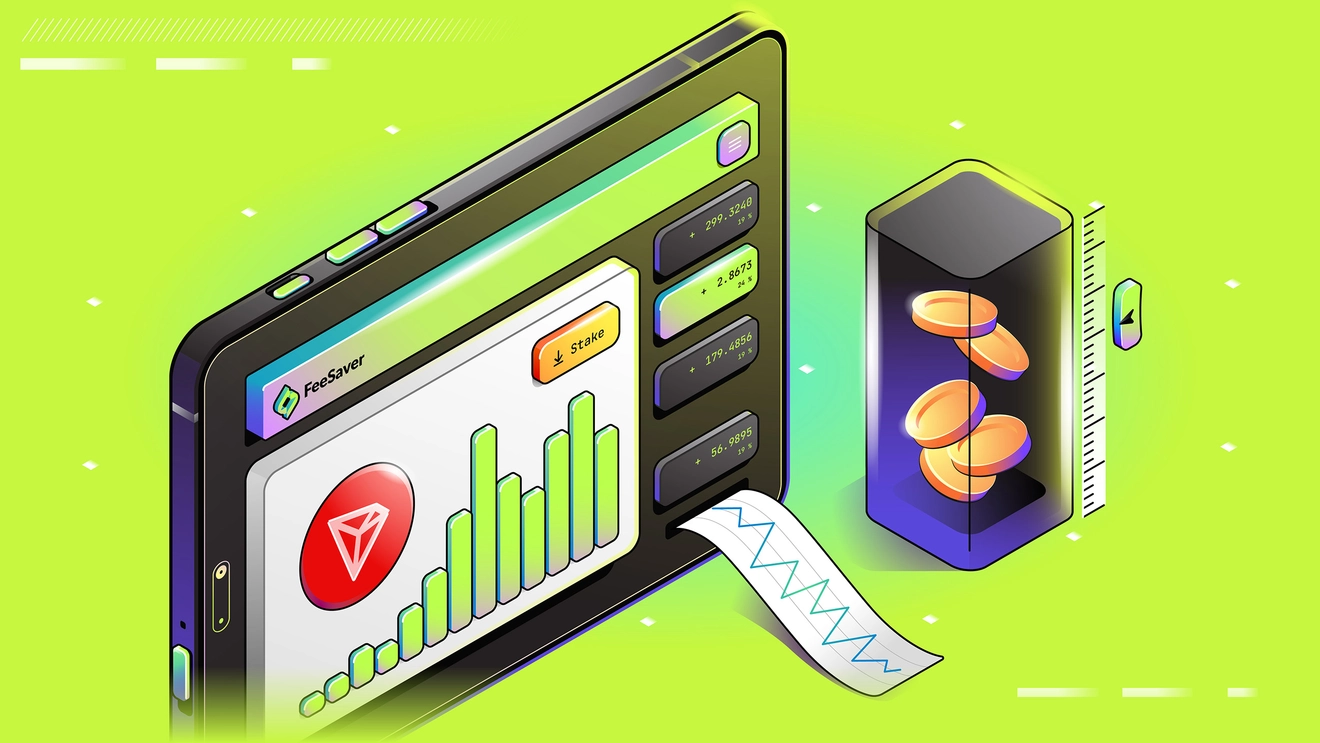
Staking is often presented as "passive crypto income", but in practice everything depends on the network, the reward mechanics, and the exact source of that yield. In some cases, we are talking about a few percent per year. In others, returns can reach double digits. For potential investors, the main question is simple: how much can you actually earn from staking, and what actions make that possible? Income does not appear on its own. It is usually formed by issuance, network fees, validator rewards, and, in some ecosystems, the monetization of network resources.
Put simply, real staking returns usually range from moderate yields in classic onchain staking to noticeably higher returns in models where an extra income source is added to the base reward. This is exactly why TRON stands out among many other networks: staking TRX gives users not only voting rights and network rewards, but also Bandwidth and Energy resources that can be used directly or delegated.
What determines staking profitability
When a user locks coins in a network, they do not receive rewards at one universal rate. Final profitability depends on several factors at once.
The first factor is the network's own economic model. In some blockchains, rewards mainly come from new coin issuance. In others, fees or the distribution of network revenue play an important role.
The second factor is the delegation model. If a user votes for a validator or a super representative, part of the reward may depend on that participant's own terms.
The third factor is the additional utility of the staked asset. In the TRON network, staking provides Energy and Bandwidth, as well as TRON Power for voting for Super Representatives. Staking 1 TRX gives 1 TP, and the resources and votes received can be used either to reduce expenses or to generate additional rewards.
There is also a difference between APR and APY. APR shows the base rate without reinvestment. APY includes compound interest. That is why two services may display similar figures, while the actual result for the user can differ depending on whether rewards are reinvested and how often that happens.
In the end, annual profitability is formed by rewards from energy delegation, voting rewards, and the effect of regular reinvestment.
What figures are realistic and what do they mean in practice
Staking profitability always depends on the specific network and on how rewards are generated. In TRON, base staking on its own provides a moderate yield, but the final result can be higher thanks to energy delegation and voting. When staking TRX through FeeSaver, users can expect about 16–17% annually from energy delegation and another roughly 3% from voting. Combined, this amounts to around 19–20% per year without compound interest, and up to 22–24% APY with regular reinvestment.
If we translate this into practical estimates, 10,000 TRX can generate about 1,900 TRX per year, while 50,000 TRX can generate around 9,500 TRX. For 100,000 TRX, income from energy delegation can be estimated at roughly 43–46 TRX per day, excluding additional voting income.
For those who want not only to understand the mechanics of profitability but also move straight to practice, FeeSaver offers a separate video guide on TRX staking and energy delegation. It shows step by step how to create a staking position, delegate energy to the pool, and set up a model for earning from network resources.
FeeSaver's public strategy as proof of profitability
To demonstrate this model in practice, FeeSaver launched a public TRX investment strategy. The logic is simple: TRX is purchased to a separate public address, staked, the resulting energy is delegated to the pool, and rewards are reinvested.

This format makes it possible to see clearly how income is formed and how compound interest works over a longer period. The FeeSaver investment portfolio also reflects this mechanism in practice: it shows the TRX balance, staking and voting rewards, and the overall portfolio dynamics. That makes the discussion about profitability more concrete, because it is based not only on calculations but also on a public strategy with transparent logic.
What to consider before getting started
Staking does not provide a fixed or guaranteed rate. Profitability in TRON remains variable and depends on current network conditions. That is why it is more accurate to think in ranges rather than rely on one rigid number.
The next point is market risk. Rewards are paid in TRX, and its dollar value changes with the market. The third factor is liquidity: after unstaking is initiated in the TRON network, there is a 14-day waiting period.
Where the line runs between regular staking and yield maximization
Regular staking provides base network rewards. Higher profitability begins where the full TRON mechanism is used: not only staking itself, but also energy delegation and voting.
When staking through FeeSaver, the user's TRX remains in their wallet, while additional income is generated through the use of network resources. That is what makes it possible to go beyond standard staking and achieve a higher final return in TRX.
Conclusion
Earnings from staking depend not only on the network itself but also on the model a user chooses. In TRON, returns can be formed by several components at once: base staking, voting, and energy delegation. Because of this, a reasonable benchmark is around 19–20% annually without compound interest and up to 22–24% APY with regular reinvestment.
FeeSaver's public strategy and investment portfolio demonstrate this mechanism in practice. In this case, staking TRX can be viewed not simply as a way to hold coins, but as a working model for generating yield.
-
How much can you realistically earn from TRX staking?
Profitability depends on how staking is used. In the basic version, the yield is usually just a few percent per year. When staking through FeeSaver, income is formed through energy delegation and voting, so the benchmark can be around 19–20% annually without compound interest and up to 22–24% APY with regular reinvestment.
-
Where does income from TRX staking actually come from?
It does not come from a single source. In TRON, income is formed through voting rewards and revenue from delegating network resources, primarily Energy. That is why the final return can be higher than in many other staking models.
-
Is staking yield fixed?
No. Profitability in TRON is variable. It depends on current network conditions, demand for resources, and delegation parameters. That is why it is more accurate to think in ranges rather than expect one fixed number.
-
Are TRX coins transferred to FeeSaver for management?
No. When staking through FeeSaver, TRX remains in the user's wallet. Additional income is generated through the use of network resources rather than by transferring the coins to the service.
-
What are the risks of TRX staking?
The main risk is market risk. Rewards are paid in TRX, and its dollar value changes with the token's market price. Another factor is liquidity: after unstaking is initiated in the TRON network, there is a waiting period, so funds cannot be withdrawn instantly.
Другие статьи
Перейти в блог-
 Education
Как отправить USDT TRC-20 с Ledger и снизить комиссию с помощью энергии TRON
-
 Education
Кому нужна аренда энергии TRON: биржам, кошелькам, платежным сервисам и не только
-
 Education
Как получить энергию в TronLink и использовать ее для перевода USDT
-
 Education
Как снизить комиссию при переводе USDT TRC-20 в Trust Wallet: встроенная и внешняя аренда энергии
Every transaction
without FeeSaver — is an overpayment
Connect your addressright now and start saving!
Комментарии (0)