
When Is It Better to Burn TRX Instead of Buying Energy: A Breakdown in Numbers
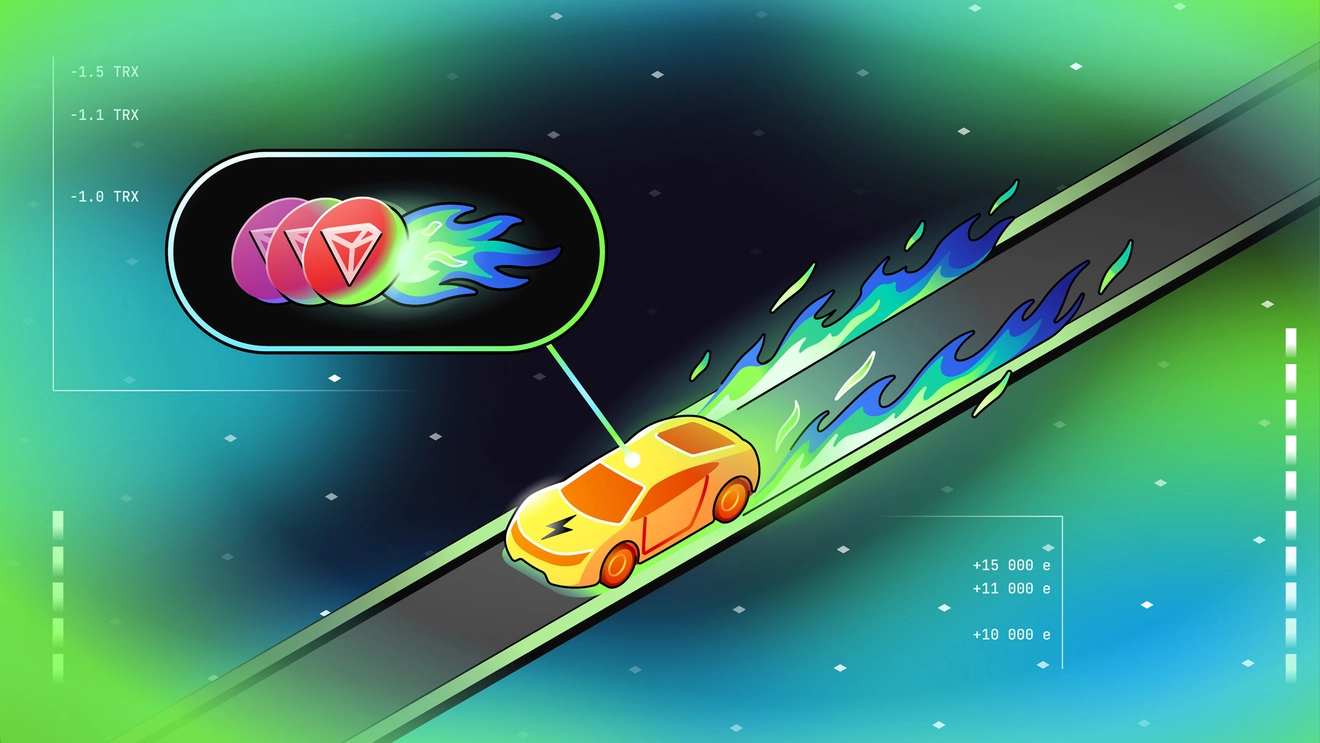
In the TRON network, fees can be paid in two ways: by using network resources or by covering the cost through burning TRX. For USDT TRC-20 transfers, the key resource is Energy. If there is not enough of it, the network automatically deducts TRX to cover the fee.
This creates a practical question for users: when is it better to buy Energy in advance, and when is it simpler and more cost-effective to pay the fee in TRX? The answer depends on one factor – how much Energy is missing for a specific transaction.
How it works
TRON has two main network resources – Bandwidth and Energy. Bandwidth covers the basic cost of sending a transaction, while Energy is required to execute smart contracts. A USDT TRC-20 transfer belongs to the second type of operation, so the main load here falls on Energy.
If the address has the required amount of the resource, the transaction is processed using it. If the resource is insufficient, the missing part is paid for by burning TRX.
The basic calculation is simple:
1 Energy = 100 sun = 0.0001 TRX
So the cost of the missing amount can be calculated using the following formula:
missing Energy × 0.0001 TRX
How much Energy is needed
For practical calculations, two common scenarios are usually used:
- about 65,000 Energy – a standard USDT transfer
- about 131,000 Energy – a transfer to an address that has not received USDT before
These values are convenient benchmarks for comparing TRX burning with buying Energy.
If we calculate based on the network's base rate, we get:
- 65,000 Energy = 6.5 TRX
- 131,000 Energy = 13.1 TRX
If we use FeeSaver's typical scenarios as a benchmark, buying Energy for these operations costs roughly:
- about 2.5 TRX for a standard transfer
- about 5 TRX for the more expensive scenario
The main conclusion here is simple: if there is no Energy in the wallet at all, buying it is usually more cost-effective than paying the full fee by burning TRX. We explained how to estimate the required amount of Energy in more detail in a separate article.
When burning TRX can still be more cost-effective
Burning becomes a reasonable option in a different situation – when the address already has most of the required Energy and only a small amount is missing.
For example, if a transfer requires 65,000 Energy and the wallet already has 50,000, the deficit is 15,000 Energy. Burning that deficit would cost about 1.5 TRX. That is cheaper than buying a separate amount of Energy just for this transaction.
The same logic applies in more expensive scenarios. If only a small part of the required resource is missing, it is often easier to pay the difference in TRX than to buy a full new amount of Energy.
For a standard transfer, the logic is straightforward:
- if the deficit is small, burning TRX may be more cost-effective
- if the missing amount of Energy is noticeable, buying Energy usually offers a better price
When buying Energy is the better option
Buying or renting Energy is especially justified in three cases:
- if there is no Energy resource in the wallet at all
- if you transfer USDT TRC-20 regularly
- if you want to know the transaction cost in advance and avoid overpaying through TRX burning
In such cases, it is more convenient to estimate the required amount in advance and compare it with the cost of Energy. This is especially useful for those who work with transfers in the TRON network frequently and want to keep expenses under control.
Conclusion
Burning TRX is not most cost-effective when there is no Energy at all. It makes sense when a specific transaction is missing only a small part of the required resource. If the address has no Energy at all, buying or renting it is almost always cheaper than paying the fee by burning TRX.
If there is no Energy in the wallet or it is regularly insufficient, you can rent the required amount of the resource through FeeSaver to reduce transaction costs. In such a scenario, expenses for transfers on the TRON network are often significantly lower than with direct TRX burning.
-
What is more cost-effective: burning TRX or buying Energy?
If there is no Energy in the wallet at all, buying or renting it is usually more cost-effective. Burning TRX makes sense when only a small part of the required resource is missing for a transaction.
-
Why does a USDT TRC-20 transfer consume Energy?
Because a USDT transfer on the TRON network is executed through a smart contract. Operations of this type use Energy rather than only the basic network resource, Bandwidth.
-
When can burning TRX be justified?
When the address already has most of the required Energy and the remaining deficit is small. In this case, it may be easier to pay the missing amount in TRX than to buy a full new Energy package.
-
Where can you rent Energy to save on TRON fees?
If there is no Energy in the wallet or it is regularly insufficient, you can rent the required amount of the resource through FeeSaver.
Другие статьи
Перейти в блог-
 Education
Как отправить USDT TRC-20 с Ledger и снизить комиссию с помощью энергии TRON
-
 Education
Кому нужна аренда энергии TRON: биржам, кошелькам, платежным сервисам и не только
-
 Education
Как получить энергию в TronLink и использовать ее для перевода USDT
-
 Education
Как снизить комиссию при переводе USDT TRC-20 в Trust Wallet: встроенная и внешняя аренда энергии
Every transaction
without FeeSaver — is an overpayment
Connect your addressright now and start saving!
Комментарии (0)